

Seeking Strength in Numbers
Sixty schools have joined an alliance to push back against the Trump administration
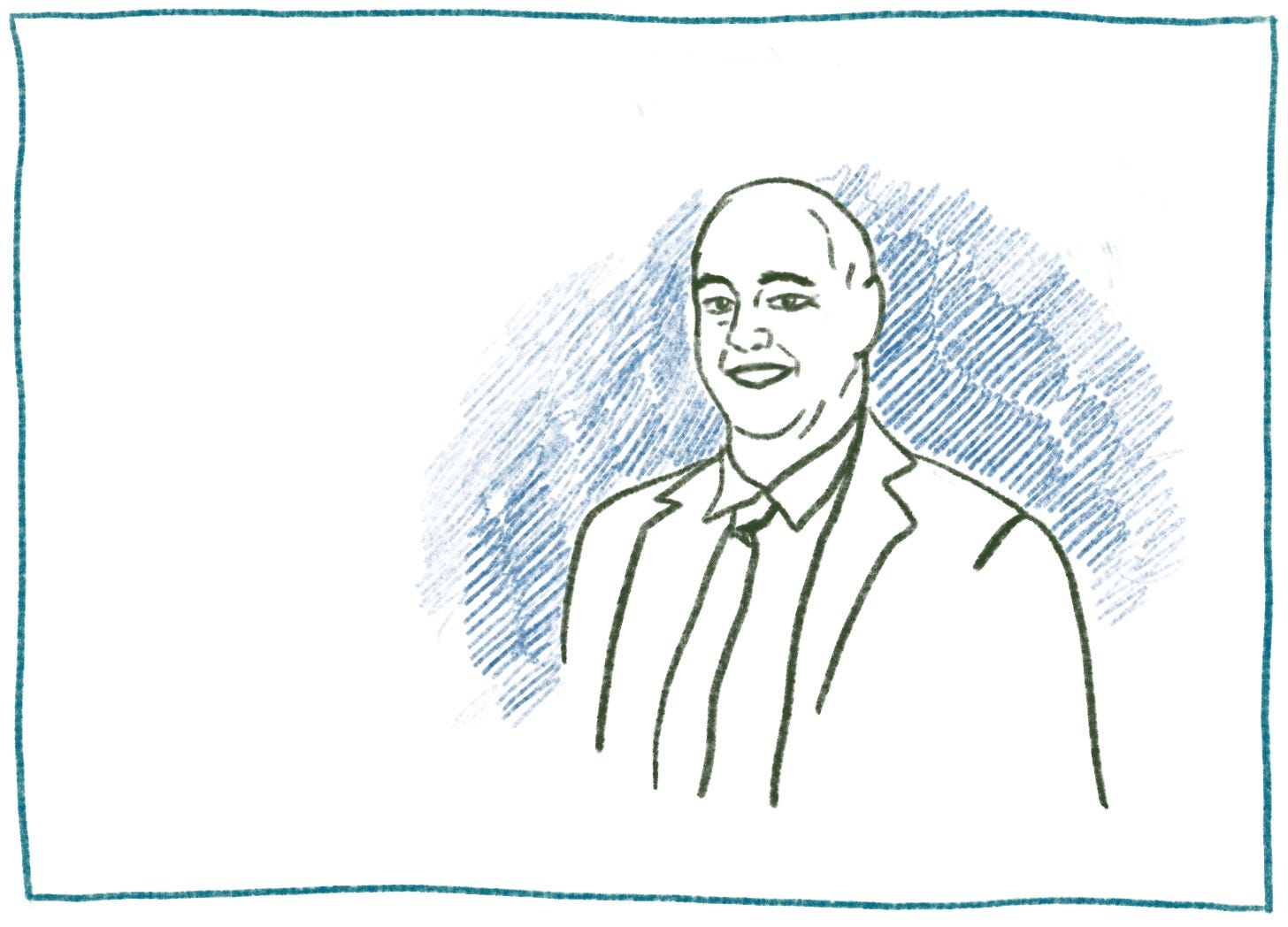
Lauren Farkas talks with Mike Gavin about the Alliance for Higher Education and how schools across the country have joined forces to combat the assault on democracy at colleges and universities
- MS
After Mike Gavin stepped down as president of Delta College in Michigan at the start of 2026, he stepped up as a leader of higher education resilience across the United States.
Gavin is the founder and president of the Alliance for Higher Education, a national coalition that launched in January to become a unified voice for democracy in higher education. The Alliance now has about 60 partner organizations representing distinct areas of interest in higher education, including the American Association of University Professors, National Association of Diversity Leaders in Higher Education, Campus Compact, Democracy Forward, Scholars at Risk, and PEN America.
The Alliance launched amid growing tension between higher education institutions and the federal government. The Trump administration has moved aggressively against the sector, leveraging federal funding at elite research universities, issuing executive orders targeting diversity programs, and pursuing what Gavin describes as a coordinated strategy to reshape what can be taught, researched, and even measured on American campuses. While some of the most public assaults occurred in 2025, Gavin says the administration is continuing to threaten these institutions through bureaucratic systems, like accreditation rulemaking, where changes affecting American colleges and universities are being advanced through processes designed to be invisible to the public.
Now, the Alliance is working to lift the hood on these changes, how they affect colleges and universities, and how these institutions can defend themselves.
CollegeWatch first spoke with Gavin in February to learn why he formed the Alliance and what it was setting out to do. In late April, we checked in with Gavin for updates on the Alliance’s work, which includes the development of Democracy’s Campus 2036, a ten-year blueprint for reimagining higher education’s role in American democracy. What follows is a conversation drawn from both of those sessions, edited and condensed for clarity.
Lauren Farkas: You started developing the Alliance for Higher Education in 2023, before the current federal administration took office. What motivated you then?
Mike Gavin: My scholarly background is on white supremacy and its intersection with different institutions. I published a book in 2021 called The New White Nationalism in Politics and Higher Education. I was a college president at the time. So when Governor Ron DeSantis began his Stop WOKE Act in Florida in 2022, I had a specific niche to address the anti-DEI legislation from a leadership level.
I’ve been in higher education for a long time. I had a lot of friends that were presidents, and I was just trying to help them out [by offering tools and advice to navigate anti-DEI legislation]. And organically, the work just became bigger than what I imagined. So in no way was I intending for it to be big, but it is my life’s work. I’ve been pursuing the notion that the higher education sector wasn’t delivering on its promises from the beginning, so we needed to do better equity work, and now it’s being assaulted, and so we need to defend it and use it as an opportunity to be better.
I don’t know that this administration has changed the way we’re looking at everything. I think it’s just crystallized for others the necessity of an organization like the Alliance to exist, and maybe they didn’t see it before.
Farkas: What are the goals of the Alliance?
Gavin: In order for democracy to thrive, we believe that the higher education sector needs to be free from partisan influence. We call this “sector autonomy.” The other part is academic freedom, or the freedom to learn without having partisan influence and/or negative repercussions. And then the third is for all people to thrive as a result of better access to college.
And we have three different work streams underneath those. One stream is to be a strategic thought leader on what higher education should be in order to serve democracy better. Another is that we would be in a rapid response leadership position. The final stream is that we are a coalition builder, recognizing that the current systems and structures of both democracy and higher education are great, but they haven’t been poised to resist authoritarianism.
And so thinking through ways in which we can collaborate together in order to ensure that, in the long term, democracy is served better by the sector and the work that we do for all students. So it’s a heavy lift, but we’re doing the good work.
Farkas: What makes the Alliance different among other higher education advocacy organizations?
Gavin: We have them all working together. That is not common in higher education, not because they’re not wanting to collaborate, but there hasn’t been a mechanism or vehicle like the Alliance to help them collaborate before.
I think the Alliance is actually positioned well because, candidly, we’ve been doing this work for about three years on these particular issues, even though we launched in January. Leading up to this was three years in the making of establishing relationships so that we were able to convene these people among these three common goals.
But also we’re very limited in scope, because we see those three pillars as foundational to higher education’s ability to deliver on American promises. Part of our ability to bring people together stems from the fact that we have intentionally created our partnerships to be inclusive of the sector of higher education as a whole, in this relationship to democracy.
We have members from community colleges to medical schools, from advisors to board members, and then we also have people from the democracy-centric space that’s not in higher ed as part of our group, and that’s not done anywhere else. So that’s how we’re different, and I think that it’s partially that difference has allowed people to come into that space with a different mindset.
Farkas: Do you think that the Trump administration’s attacks on higher education have lost their intensity? And do you think losing that intensity is going to make it harder to sustain coalition momentum?
Gavin: I think probably not for either. The perceived intensity that happened when Trump came into office was only because often the media was focusing on the top Ivy schools and their experiences. But from 2023 we saw state-funded schools, community colleges, and regional public schools under assault. That intensity has been felt across the sector for quite a while. It’s just that the media coverage has been quite poor with regard to the impact on everyday citizens.
I think the danger right now is actually worse, however, because the Trump administration has found ways to attack higher ed through very wonky processes that are not going to gain media attention because they don’t seem as egregious as holding an institution like Columbia, Harvard, or Stanford hostage for millions of dollars.
Farkas: How is the Trump administration attacking higher education now?
Gavin: What we’re seeing is a process called Negotiated Rulemaking on Accreditation, where all 4,000 colleges will be held hostage in the same way, but it will happen through a process that’s actually potentially legal and actually more egregious, and it’s invisible to most of the public.
The U.S. Department of Education had its first series of meetings weeks ago, and they did exactly what we expected, which was to recommend changes in the accreditation process to prohibit higher education institutions from disaggregating data, and also to adopt a curricular standpoint that they’re calling intellectual diversity but actually means no study of race, gender or sexuality.
The problem with the weaponization that occurs is that in order for institutions to disperse financial aid, they have to be accredited. This is the secret weapon of the administration to attack all 4,000 colleges.
The second one is through a proposal to change the language of systems award management. And this is, again, one of those things people don’t pay attention to. I wouldn’t pay attention to it, really, as a former college president. But they’re proposing to change the language that says you have to sign an agreement for System for Award Management in order to hold on to any federal funding. And this is for any organization, whether it’s higher education or not, that’s pulling down federal funding. And the language proposed is something to the effect of you will not engage in what they call illegal Diversity Equity and Inclusion.
It’s not as flashy, and it doesn’t get a lot of media attention, but it’s actually worse than the high-level stories that you’ve heard.
Farkas: What are some examples of the work the Alliance is doing in response?
Gavin: For the System for Award Management, we got about 150 cosigners on a public comment that the proposed language violates first amendment rights and also violates due process issues for immigrants. For the accreditation issue, we have talked to attorneys general in states where their state constitutions would be violated through such changes in accreditation language, so that they can proactively reach out to institutions accordingly. We’ve been also working with influencers on social media to explain this issue in plain terms to the American public.
Farkas: The Alliance started Democracy’s Campus 2036 in February and plans to release it this Fall. What is the status of this initiative?
Gavin: We launched on February 27, and since then we’ve had multiple meetings with organizational representatives to think through what higher education should look like ten years from now. But before those meetings even began, we did a landscape scan of roughly 60 higher education organizations, looking at what each of them was already thinking about with regard to our three pillars: sector autonomy, academic freedom, and what we call fair opportunity, or what others call equity. We did that scan because we don’t want to repeat work unnecessarily.
There’s widespread agreement that those are the foundational problems of the day that need to be addressed, and there’s a lot of high-level thought about them, without a lot of concrete tactics to make sure that they’re preserved or imagined for a future-facing world. And that’s the latter part, which is like, “so what are we going to do about it?” That is where Democracy’s Campus is geared toward answering.
Farkas: You keep coming back to the idea that part of the Alliance’s job is providing hope. What does that mean practically when the threats are this concrete and this immediate?
Gavin: Providing hope is the other element to the work that we have to be engaged in, hope for people in the higher ed sector – and in democracy in general – who care about knowledge. We want them to know that there’s a group out there trying to do good work and we want them to join us. At the end of the day, if we could provide hope, agency and a little bit of spark of the imagination in the next year, that would be an amazing feat for us.
We’re not going to be able to count that in a calculator, but it does matter.
- Lauren Farkas